First Novel

    The Ugly

    Muzhduk the Ugli the Fourth is a 300-pound boulder-throwing mountain man from Siberia whose tribal homeland is stolen by an American lawyer to build a butterfly conservatory for wealthy tourists. In order to restore his people's land and honor, Muzhduk must travel to Harvard Law School to learn how to throw words instead of boulders.

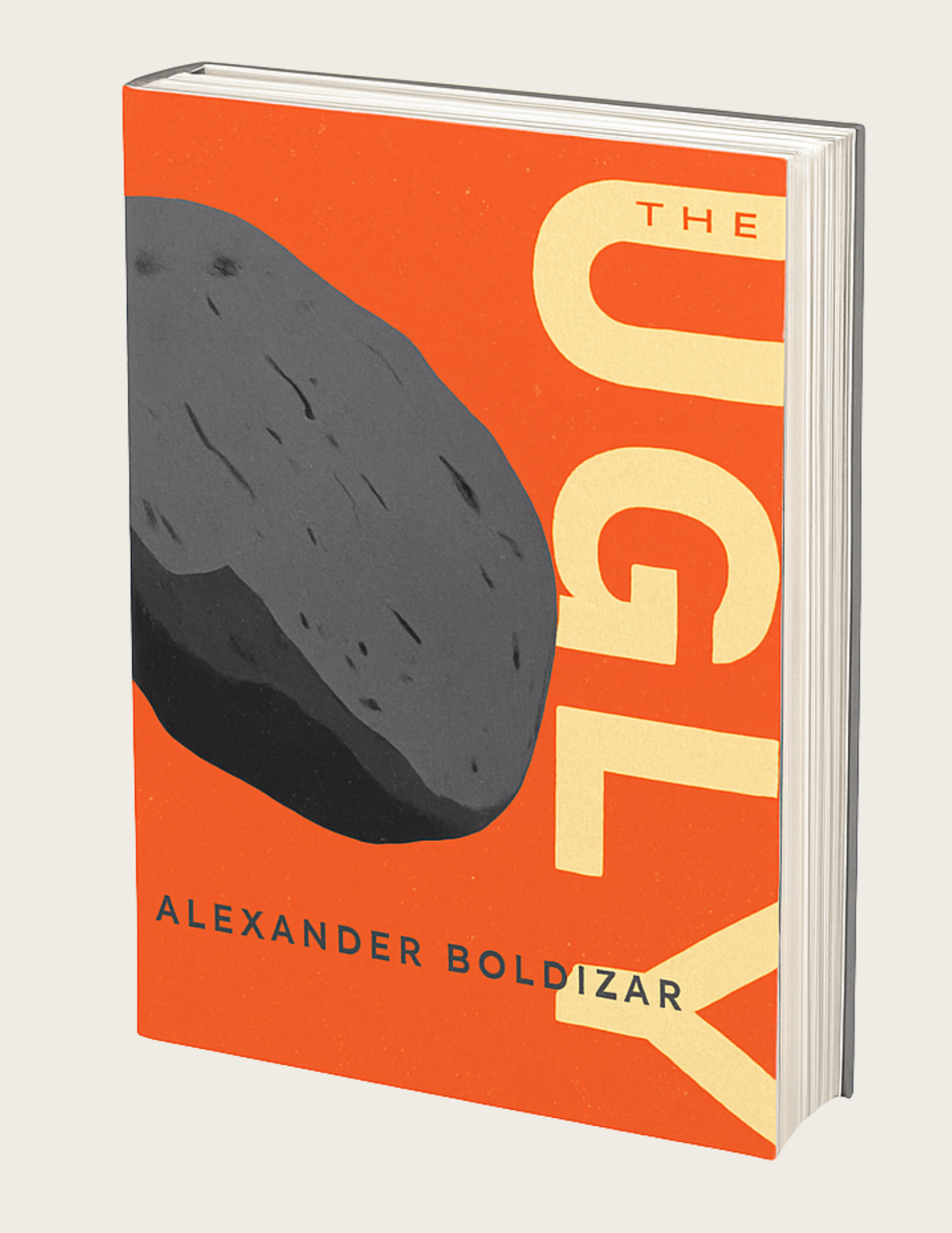
    Cover of The Ugly by Alexander Boldizar

    Synopsis

    The Ugly by Alexander Boldizar is a satirical novel about Muzhduk the Ugli the Fourth, a boulder-throwing Siberian Slovak who goes to Harvard Law School to win back his tribe's stolen land by learning to throw words instead of boulders. It won the CIBA Overall Grand Prize for Best Book of 2016 and Somerset Prize for literary fiction, and was named one of Entropy Magazine's best fiction books of 2016.

    Muzhduk's tribal homeland is stolen by an American lawyer to build a butterfly conservatory for wealthy tourists. In order to restore his people's land and honor, Muzhduk must travel to Harvard Law School to learn how to throw words instead of boulders.

    Details

    PublisherBrooklyn Arts Press, 2016 (paperback and ebook)
    ISBN9781936767472
    Czech editionOšklivec (Jota)
    GenreSatire; literary fiction
    SettingSiberia, Harvard Law School, Mali
    Principal charactersMuzhduk the Ugli the Fourth, a 300-pound boulder-throwing mountain man from a lost Slovak tribe in Siberia; Oedda, his love interest of sorts, a postmodernist professor from the deepest forests of Finland; Sclera, a professor of Civil Procedure; a version of Winnie the Pooh, who lived in a tree on campus next to the Science Center
    SeriesStandalone novel
    AwardsCIBA Overall Grand Prize, Best Book of 2016; Somerset Prize, Literary & Contemporary Fiction; CIBA Award, Satire; Foreword INDIES, Literary Fiction and Humor, finalist (2016); Bread Loaf Writers' Conference nominee, Best New American Voices; Entropy Magazine, Best Fiction Books of 2016; Small Press Distribution fiction bestseller list, six months
    Themes & tropesLegal satire; Harvard Law School; boulder-throwing; word-throwing; a lost Slovak tribe in Siberia; what is thinking?; the limits of logic; formalism vs idealism vs postmodernism vs surrealism; language versus force; a picaresque; Mali and the Tuareg rebellion; exile and tribalism; post-Soviet and postcolonial satire

    For Readers

    What it's like

    A picaresque in two voices. The Harvard chapters, told in the third person, are a comic assault on legal education and analytic language; the African chapters, told in the first person, follow Muzhduk into Mali in search of a fellow student who has joined the Tuareg rebellion. It is philosophical, digressive and funny, in the tradition of Heller and Kafka, and its jokes carry an argument about law, language and an exploration of the question “what is thinking?”

    Who it's for

    Readers of literary and philosophical satire; lawyers and law students (Harvard Law Bulletin: it "breaks the mold on books set in law school"); readers interested in Central European émigré fiction (Nina Weller of the Leibniz Centre for Literary and Cultural Research in Berlin, writing in the 2025 working papers of Caponeu, the EU-funded research consortium on the political novel in Europe, called it one of "two of the most important novels in the field of Slovakian literature of the last three decades.") Not for readers who want a tidy plot or a quick read, and the translated Slovak curses, as Kirkus noted, are "sometimes offensive but consistently hilarious."

    Read an excerpt

    Prologue — I, Muzhduk

    Muzhduk stepped left to put himself in the path of the flying boulder. It was the size and shape of a small pig, but much heavier, and it came at him like a canon shot. Muzhduk leaned forward to meet the boulder, knees bent, hoping to absorb the impact with his legs. He staggered backward with the force of the blow, but did not drop the big rock.

    The audience erupted with cheering, and a cloud of yellow butterflies scattered from the noise. His opponent was Hulagu, arguably the strongest Slovak in the tribe, and all six villages were present for the Dull-Boulder Throw. All the Slovaks who lived in…

    Read the full excerpt →

    Awards & Recognition

    Best BookWinner, CIBA — Overall Grand Prize, Best Book of 2016
    LiteraryWinner, Somerset Prize — Literary & Contemporary Fiction
    SatireWinner, Somerset Prize — Satire
    LiteraryFinalist, Foreword Reviews — Literary Fiction
    HumorFinalist, Foreword Reviews — Humor
    DebutNominee, Bread Loaf — Best New American Voices
    Best FictionEntropy Magazine — Best Fiction Books of 2016
    Best FictionBook Scrolling — Best Books of 2016
    BestsellerSmall Press Distribution — 6 months on Fiction Bestseller List
    GoodreadsVoted #1 in September 2016 Releases
    Amazon#1 World Literature · #1 Mythology · #1 Eastern European Lit · #3 Dark Humor

    Reviews

    "Muscular critique of conflicts both intellectual and physical. A surprising treat."

    — Publishers Weekly

    "Like a boisterous Borges ignoring the delete key or an angry Celine forced to write in a language he hates, Alexander Boldizar plays with our minds by mixing fact with fiction in The Ugly... Borrowing from every fabulist he knows he turns Conrad's Heart of Darkness on its head. Kurtz's 'horror' has become Boldizar's 'Ugly'... It's as if the Harvard Lampoon turned on itself...Kurtz has returned from the jungle and the horror is our institutions."

    — Buffalo News

    William L. Morris

    "Consistently hilarious...[The Ugly is] a bizarre but delightful sendup of illogical arguments."

    — Kirkus Reviews

    "Comedically absurd but also introspective, The Ugly challenges dogmatic clinging to the letter of the law...a globe-trotting tour de force that examines the complex relationship between words and actions."

    — Foreword Reviews

    5 stars · Editor's Pick

    "Boldizar's debut successfully recognizes the chasm between youthful idealism and the reality it's often mired in."

    — Booklist

    Poornima Apte

    "Intelligent and emotional, existential and comedic, the satirical novel takes on the irrational trappings of our supposedly rational world."

    — Poets & Writers

    "The Ugly is an ambitious, deep, hilarious work that exists somewhere between the real and the absurd. Boldizar is able to balance humour and deep meaning to comment on law, thought, and how we construct meaning."

    — Softcover

    "Hilarious, intelligent, challenging, and entertaining...This decade's A Confederacy of Dunces."

    — Clash Media

    "The Ugly breaks the mold on books set in law school."

    — Harvard Law Bulletin

    "The Ugly is often laugh-out-loud funny...I definitely recommend [it] for fans of insightful law school satire. If (for some reason) you are a fan of Senator Ted Cruz, you will definitely not enjoy The Ugly."

    — Above the Law

    "Oddly unforgettable debut...Boldizar's strength is his ability in writing confidently and intimately of these two drastically different, and equally foreign, worlds."

    — Heavy Feather Review

    "One of the strangest, craziest, funniest, most interesting and most different novels anyone has ever put out."

    — Slovak Spectrum TV

    "A bold and hilarious satire."

    — LargeheartedBoy

    "The best, most colorful, and most accurate depiction of what cultural confusion feels like that I have ever read."

    — Sarah Hinlicky Wilson

    "Slovak Novels in English #4: The Ugly"

    More reviews and interviews →

    What Authors Are Saying

    "The Ugly is the funniest, smartest novel I've read in a long, long time."

    — Pete Duval

    Author of Rear View: Stories

    "Seldom does one encounter a book that balances so much intelligence with so much heart. Muzhduk the Ugli belongs among the great heroes of fiction, alongside Bellow's Augie March and Dostoevsky's Alyosha. The Ugli is like a great professor entertaining with larger than life stories. It's only after you stop laughing that you realize how much you've learned."

    — Mark Powell

    Author of The Sheltering

    "A picaresque novel about mountain people, Harvard lawyers, the heft of rocks, and the power of words. The Ugly brims with intelligence and humor."

    — Laila Lalami

    Author of The Moor's Account · Pulitzer Finalist

    "This is a strange and bold novel, original in its scope, story, and point of view. A wild fictional ride that will leave you wanting more."

    — Nina Swamidoss McConigley

    Author of Cowboys and East Indians · PEN Open Book Award Winner

    "Boldizar has opened a door into the parallel universe of myth. Out of it has stepped a modern day Beowulf."

    — Alan Stone

    President, American Psychiatric Association

    "Alexander Boldizar's The Ugly, the hilarious and inventive and unforgettable story of Muzhduk the Ugli, is a work of kinetic absurdism infused with deep intelligence and feeling. A gift of a debut from a wholly original new voice."

    — Laura van den Berg

    Author of Find Me

    "An epic satire not only of American legal education and the American legal system, but of modernity itself...The closest comparison I can think of to this book is A Confederacy of Dunces — it is a story of an outsider who has a pure heart and a vast mind exposing our comfortable world simply by being forced to live in it."

    — Schedlinsky

    Scholarship

    "Two of the most important novels in the field of Slovakian literature of the last three decades."

    — Nina Weller, Leibniz Centre for Literary and Cultural Research, Berlin, on The Ugly and Peter Pišťanek's Rivers of Babylon, in "Response to Charles Sabatos", European Centers and Peripheries in the Political Novel (Caponeu Working Papers, 2025).

    "Pišťanek's and Boldizar's works metaphorically portray the political and psychological traumas of the post-Communist era through the concepts of exile and tribalism, by repositioning the usually marginalized Slovak Republic as a center in relation to post-Soviet and postcolonial peripheries."

    — Charles Sabatos, Yeditepe University, "Reimagining Political Peripheries in Pišťanek's and Boldizar's Siberian Slovakia", Caponeu Working Papers, 2025.

    Full text (PDF): Caponeu Working Papers, pp. 37–55

    Foreign Editions

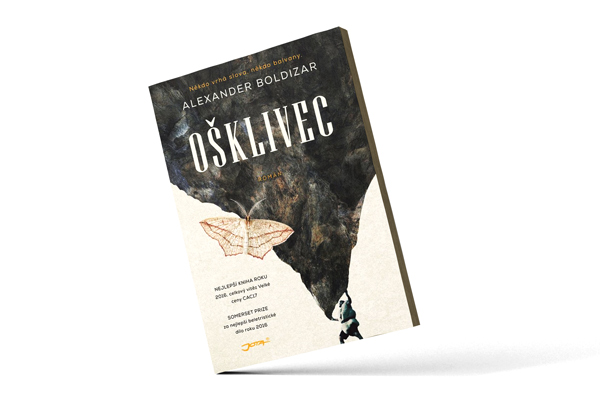
    Cover of Ošklivec, the Czech edition of The Ugly by Alexander Boldizar

    Czech (Jota Press) — Osklivec

    Rights & Representation

    Author

    Alexander Boldizar

    Foreign Rights

    Sandy Hodgman

    Hodgman Literary

    Publisher (English)

    Brooklyn Arts Press

    Publisher (Czech)

    Jota Press

    FAQ

    What is The Ugly about?

    The Ugly by Alexander Boldizar is a satirical novel about Muzhduk the Ugli the Fourth, a 300-pound mountain-man from a lost Slovak tribe in Siberia that selects its chief through the Dull-Boulder Throw contest. When an American lawyer steals his tribe's land, Muzhduk travels to Harvard Law School to learn how to throw words instead of boulders, and later to Mali in search of a fellow student who has joined the Tuareg rebellion.

    Is The Ugly a novel about law school?

    Partly. The Ugly is set at Harvard Law School for much of its length and satirizes American legal education, but its core is a philosophical examination of the question “What is thinking?” It takes a fabulist and allegorical approach to clash different styles of thinking, as represented by different characters, against each other. But it is also a picaresque about exile, tribalism and language, and takes place in Siberia and West Africa along with Cambridge, MA.

    The Harvard Law Bulletin wrote that it “breaks the mold on books set in law school.”

    What awards did The Ugly win?

    The Ugly won the CIBA Overall Grand Prize for Best Book of 2016 and the Somerset Prize for literary fiction, was a Foreword INDIES finalist for literary fiction and for humor, an excerpt was chosen by the Bread Loaf Writers' Conference as its nominee for the Best New American Voices anthology and was named one of Entropy Magazine's best fiction books of 2016.

    Has The Ugly been studied academically?

    Yes. In 2025 Caponeu, an EU-funded research consortium on the political novel in Europe, published a working paper by Charles Sabatos of Yeditepe University reading The Ugly alongside Peter Pišťanek's Rivers of Babylon. In her response, Nina Weller of the Leibniz Centre for Literary and Cultural Research in Berlin called them "two of the most important novels in the field of Slovakian literature of the last three decades."

    Is The Ugly available in other languages?

    Yes. The Ugly was published in Czech as Ošklivec by Jota Press.

    Is there an audiobook of The Ugly?

    No. The Ugly is available in paperback and ebook.

    What kind of reader will love The Ugly but not The Man Who Saw Seconds?

    A reader who wants the ideas on the surface. The Ugly is a digressive philosophical comedy about law, language and what thinking is; it rewards patience and reads more like Catch-22 or A Confederacy of Dunces than like a thriller. The Man Who Saw Seconds runs its ideas underneath a fast manhunt. If you loved Catch-22 for the arguments, start with The Ugly; if you loved it for the momentum, start with The Man Who Saw Seconds. Readers who want a female narrator, a conversational tone and no science fiction should go to Ride or Die Girl.

    Which Alexander Boldizar novel is right for you?

    Fast science-fiction thriller with a father-and-son core: The Man Who Saw Seconds. Absurdist literary satire of law school: The Ugly. Dark literary crime with a complex female narrator, set in British Columbia: Ride or Die Girl. All three stand alone; none is a sequel. A side-by-side comparison of the three novels is on the Works page, at boldizar.com/works.

    If you liked

    Absurdist satire — Joseph Heller's Catch-22; John Kennedy Toole's A Confederacy of Dunces; Jaroslav Hašek's The Good Soldier Švejk

    Philosophical and existential fiction — Kafka's The Trial; Robert Musil's The Man Without Qualities; Borges (The Buffalo News called Boldizar “a boisterous Borges ignoring the delete key”)

    Surreal and fabulist literary fiction — Bulgakov's The Master and Margarita

    Picaresques and outsider heroes — Saul Bellow's Henderson the Rain King and The Adventures of Augie March

    Law school, if you wanted the satire instead — Scott Turow's One L; The Paper Chase

    The colonial encounter, inverted — Conrad's Heart of Darkness (The Buffalo News: “Kurtz has returned from the jungle and the horror is our institutions”)

    Not for readers who want: a tidy plot, a quick read, or a courtroom drama.

    All questions →

    Order Now